Blackjack for Beginners: Rules, Card Values, Smart Decisions, and Responsible Play
Introduction
Blackjack is a classic card game built around a simple target: create a hand that is closer to 21 than the dealer’s hand without going over 21. Its straightforward rules make it easy for newcomers to learn, while the decisions made during each hand give the game more depth than many other traditional card games.
For beginners, blackjack can seem confusing because of terms such as hit, stand, split, double down, soft hand, and hard hand. Once these concepts are understood, the game becomes much easier to follow.
This guide explains the fundamentals of blackjack, how a typical round works, the meaning of common actions, basic strategy concepts, and important points to remember when playing for entertainment or money.
What Is Blackjack?
Blackjack is a card game traditionally played between individual players and a dealer. One or more standard decks may be used depending on the particular game.
The main objective is to finish with a hand value higher than the dealer’s without exceeding 21.
For example, if a player’s final hand is 19 and the dealer has 17, the player wins. If the player’s hand reaches 22, the player busts and normally loses immediately.
Blackjack is sometimes referred to as “21” because the number plays such an important role in the game.
Understanding Blackjack Card Values
Before playing, it is essential to know how each card is valued.
Number Cards
Cards from 2 through 10 are worth their printed numbers.
For example:
- 3 is worth 3
- 8 is worth 8
- 10 is worth 10
Face Cards
The jack, queen, and king are each worth 10.
Ace
The ace can count as either 1 or 11, depending on which value produces the most useful hand without exceeding 21.
For example, an ace and a 6 can total 17 when the ace counts as 11.
If another card makes that value impossible, the ace can change to a value of 1.
The Goal of the Game
The objective is not necessarily to get exactly 21.
Instead, players generally want to finish with a higher total than the dealer while staying at or below 21.
Consider these examples:
Player: 20
Dealer: 18
Result: Player wins
Another example:
Player: 18
Dealer: 20
Result: Dealer wins
If both finish with the same total, the result is generally a push, meaning the original wager is returned according to standard rules.
How a Blackjack Round Works
A typical round follows a predictable sequence.
1. Place the Wager
In a money-based game, players place their wagers before receiving their cards. Table minimums and maximums can vary.
2. Receive the Starting Cards
The player receives two cards, and the dealer also receives their initial cards. In many common formats, one dealer card is visible while another remains hidden.
3. Evaluate the Hand
The player calculates the value of the two cards and considers the dealer’s visible card.
For example, a starting hand of 10 and 7 has a total of 17.
4. Choose an Action
Depending on the situation and table rules, the player may hit, stand, double down, or split.
5. Dealer Completes the Hand
After the players finish their decisions, the dealer reveals the hidden card and follows the predetermined dealer rules.
6. Determine the Result
The final player hand is compared with the dealer’s hand unless the player has already busted.
What Does Hit Mean?
A hit means asking for another card.
Suppose your current hand is:
8 + 5 = 13
You may decide to hit because you want to improve the hand.
If you receive a 6, your new total becomes 19.
However, if you receive a 10, your total becomes 23 and you bust.
This is one of the central decisions in blackjack because improving a weak hand always involves some risk.
What Does Stand Mean?
Standing means keeping your current hand and taking no additional cards.
For example, if your hand totals 19, you may decide that receiving another card carries too much risk.
Once you stand, your turn is normally complete and the dealer proceeds according to the game’s rules.
What Is Double Down?
Double down is an option available under certain table rules. The player increases the original wager, usually doubling it, and receives one additional card before standing.
For example:
Initial wager: $10
Double-down wager: $20
The player then receives one additional card and cannot normally request another card afterward.
Because the wager increases, this decision should be made carefully and according to the specific rules of the game.
What Is Splitting?
Splitting may be available when the player’s first two cards meet the table’s requirements for a split.
For example, if a player receives two 8s, the cards can potentially be divided into two separate hands.
A new wager is generally placed on the second hand, and each hand receives additional cards.
Splitting can create more opportunities, but it also increases the amount at risk.
What Is a Natural Blackjack?
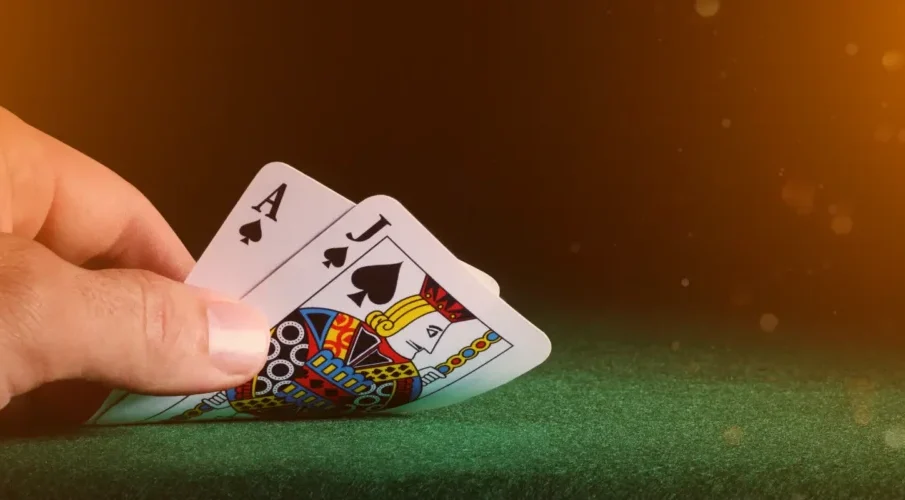
A natural blackjack generally occurs when the player’s initial two cards are an ace and a 10-value card.
Examples include:
- Ace + 10
- Ace + Jack
- Ace + Queen
- Ace + King
A natural blackjack is different from making 21 using three or more cards.
For instance, 7 + 7 + 7 equals 21, but it is not normally classified as a natural blackjack.
The payout for a natural blackjack can vary according to the rules of the particular game.
Soft Hand vs. Hard Hand
Understanding these two terms makes many blackjack discussions easier.
Soft Hand
A soft hand contains an ace that can currently be counted as 11 without causing a bust.
For example:
Ace + 5 = soft 16
If another card is dealt, the ace may change to 1 if necessary.
Hard Hand
A hard hand either has no ace or has an ace that must count as 1.
For example:
10 + 6 = hard 16
Another example:
Ace + 6 + 10 = hard 17
Here, the ace must count as 1 because counting it as 11 would produce a total greater than 21.
What Is a Bust?
A bust happens when a hand exceeds 21.
For example:
15 + 8 = 23
The hand has busted.
A player who busts normally loses immediately, even if the dealer later goes over 21.
This makes knowing when to take another card particularly important.
A Simple Blackjack Example
Imagine that you receive:
9 + 7 = 16
The dealer’s visible card is a 5.
You now need to decide whether to hit or stand based on the rules and strategy applicable to that game.
If you hit and receive a 3, your total becomes 19.
If you receive an 8 instead, your total becomes 24 and you bust.
The example demonstrates the basic tension in blackjack: staying with a low total may leave you vulnerable to the dealer, while taking another card creates a chance of exceeding 21.
Does Blackjack Require Strategy?
Blackjack includes a strategic element because players can choose how to respond to their cards.
Basic strategy uses mathematical analysis of possible outcomes to recommend decisions based on the player’s hand and the dealer’s visible card.
However, strategy does not guarantee that a player will win individual hands.
Learn the Basic Decisions
New players should first understand when the common actions are available and what each action does.
Pay Attention to the Dealer’s Upcard
The dealer’s visible card provides useful information about the situation. Different dealer upcards can create different mathematical circumstances.
Avoid Emotional Decisions
Winning or losing several hands in a row does not guarantee what will happen next.
A previous loss does not make a win “due,” and a previous win does not mean another win is guaranteed.
Understand the Rules
Basic strategy can change depending on factors such as the number of decks, dealer rules, blackjack payouts, and restrictions on doubling or splitting.
Common Blackjack Mistakes
Taking Cards Without Considering the Total
Players sometimes focus on improving their hand without considering the risk of exceeding 21.
Assuming Every 21 Is a Blackjack
A natural blackjack normally requires an ace and a 10-value card as the initial two cards. A 21 made with several cards is not necessarily the same thing.
Ignoring the Dealer’s Card
The dealer’s visible card is an important part of evaluating a hand.
Increasing Bets After Losing
Trying to recover losses by continuously increasing wagers can create unnecessary financial risk.
Playing Without Knowing the Rules
Different blackjack tables can have different conditions. Players should understand the rules before placing a wager.
Blackjack and Probability
The outcome of each hand depends heavily on chance. Players do not control which card appears next.
The mathematical characteristics of a blackjack game can depend on:
- Number of decks
- Dealer drawing rules
- Blackjack payout
- Doubling restrictions
- Splitting rules
- Other table conditions
Because of these differences, there is no single strategy that applies perfectly to every variation.
Playing Blackjack Responsibly
When blackjack involves real money, responsible play should always come first.
Set a spending limit before starting and consider that amount entertainment spending rather than money you expect to earn.
Avoid using money needed for rent, food, bills, savings, or other important expenses.
Most importantly, do not chase losses. Continuing to wager simply because you want to recover previous losses can turn a recreational activity into a serious financial problem.
Blackjack can also be enjoyed without money by using points or play chips.
Blackjack at Home
A home blackjack game can be a fun way to learn the rules without financial pressure.
Friends can use ordinary playing cards and assign a rotating dealer. Instead of real money, players can use tokens or points.
This approach allows beginners to practice:
- Calculating card values
- Understanding the ace
- Choosing hit or stand
- Learning split and double-down concepts
- Following dealer procedures
It also makes the game suitable for casual social gatherings.
Frequently Asked Questions
Is blackjack easy to learn?
Yes. The basic objective and card values are simple. Understanding strategy and rule variations takes more practice.
Why is blackjack also called 21?
The name “21” comes from the game’s central goal of getting as close to 21 as possible without exceeding it.
What is the strongest starting hand?
A natural blackjack, normally an ace combined with a 10-value card, is generally the strongest initial hand.
Can the dealer bust?
Yes. If the dealer’s final total exceeds 21, the dealer busts.
What happens if both hands have the same total?
A matching final total is generally a push under standard rules, returning the original wager.
Can blackjack be played for fun without money?
Yes. Players can use points, tokens, or imaginary wagers to enjoy and practice the game without financial risk.
Does blackjack strategy guarantee a win?
No. Strategy can improve decision-making and reduce the mathematical disadvantage under particular rules, but it cannot guarantee individual wins or eliminate chance.
Is blackjack suitable for beginners?
Yes. Its basic rules are accessible, although beginners should take time to understand the different actions and table conditions.
Conclusion
Blackjack is an engaging card game because it combines simple rules with meaningful decisions. Understanding card values, the role of the ace, dealer procedures, and actions such as hitting, standing, doubling down, and splitting provides a solid foundation for new players.
Strategy can help players make mathematically informed decisions, but no approach can guarantee a winning result. The rules of the specific game also matter, so players should always understand the table conditions before participating.
For beginners, the best way to learn blackjack is to start with the fundamentals, practice in a risk-free environment, and gradually become familiar with different hand situations. When money is involved, responsible limits and a clear understanding of the risks should always remain more important than trying to win back losses.