Card Game: Exploring the Rules, Types, Benefits, and Fun Ways to Play
Introduction
A card game can turn an ordinary afternoon into an enjoyable social activity. With nothing more than a deck of cards and a basic understanding of the rules, players can enjoy friendly competition, strategic challenges, memory exercises, or simple entertainment.
Card games have existed in many forms for centuries, and their popularity continues today. Some games are based mostly on luck, while others require careful planning and observation. There are also games designed for children, families, large groups, solo players, and competitive communities.
This guide explains what makes card games interesting, how different formats work, how to choose a suitable game, and how beginners can quickly become comfortable with playing cards.
What Is a Card Game?
A card game is a game that uses cards as its main playing components. The cards may contain numbers, suits, words, pictures, characters, symbols, or special abilities.
The objective varies depending on the game.
A player might need to:
- Collect certain cards
- Match cards
- Get rid of all cards
- Win individual tricks
- Build the strongest combination
- Earn the highest score
- Complete a specific sequence
- Achieve a particular objective before opponents
This flexibility is one reason card games can appeal to such a wide range of players.
The Basic Parts of a Traditional Deck
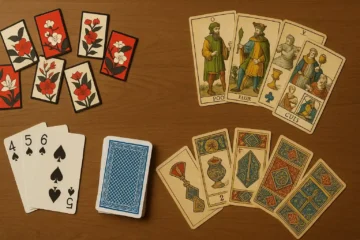
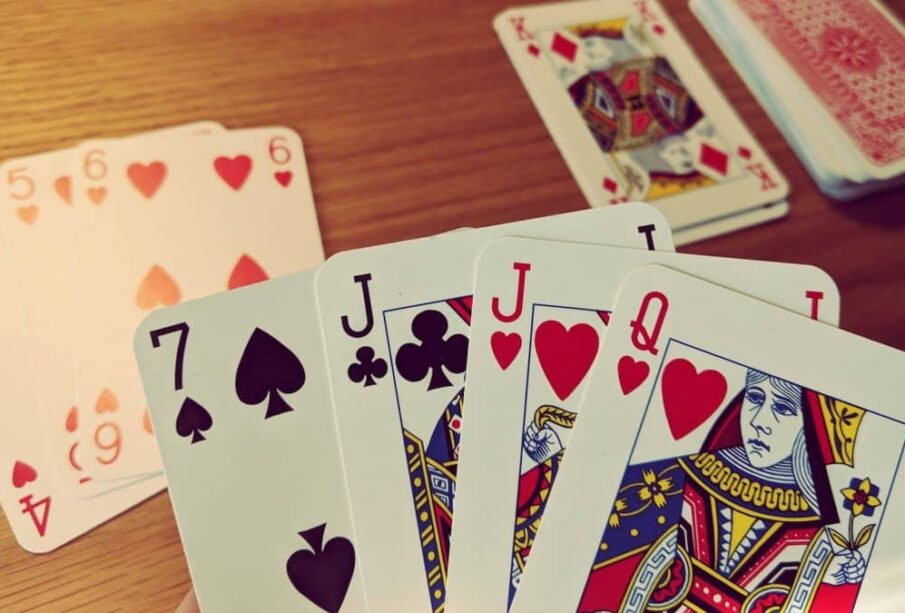
A standard 52-card deck is one of the most familiar card sets.
It contains four suits:
Hearts
Hearts are traditionally represented in red and are commonly associated with the heart symbol.
Diamonds
Diamonds are also red and use a diamond-shaped symbol.
Clubs
Clubs are black and use the club symbol.
Spades
Spades are black and use the spade symbol.
Each suit normally contains 13 cards, including the ace, numbered cards from 2 to 10, and the jack, queen, and king.
Some games also use jokers or specialized cards.
Different Categories of Card Games
The phrase “card game” covers many different formats.
Trick-Taking Games
In a trick-taking game, players usually place one card into the center during each round. The strongest qualifying card wins the trick according to the game’s rules.
Players may need to follow a particular suit or use a trump suit.
These games often reward planning, memory, and careful observation.
Matching Games
Matching games involve finding cards that share a number, color, symbol, picture, or other feature.
They are often suitable for beginners because the central concept is easy to understand.
Shedding Games
The objective is generally to be the first player to get rid of all their cards.
Depending on the game, players may need to match the previous card by number, color, suit, or another characteristic.
Collection Games
Collection-based games encourage players to gather particular sets or combinations of cards.
The player who collects the required combinations or achieves the highest score may win.
Solitaire Games
Solitaire games are designed for one player.
The cards are arranged in a particular layout, and the player follows a set of rules to reorganize them into the required arrangement.
These games are useful when someone wants a quiet activity without needing other players.
Strategy Card Games
Strategy card games involve more planning and decision-making.
Players may need to manage limited resources, predict opponents’ actions, choose when to attack or defend, or build combinations that work together.
Why People Enjoy Card Games
Simple Setup
Most traditional card games require very little equipment. A deck of cards and a suitable playing surface are often enough.
Social Interaction
Card games give people a reason to sit together, talk, laugh, and compete.
Variety
One deck can support numerous games. Learning a new game can provide a completely different experience without purchasing new equipment.
Portable Entertainment
Cards are lightweight and easy to carry, making them convenient for travel, vacations, gatherings, and casual activities.
Different Levels of Difficulty
A family can choose a simple game for beginners or a more advanced format for experienced players.
Skills That Card Games Can Encourage
Card games can be entertaining while also encouraging useful mental skills.
Memory
Some games require players to remember cards that have already appeared.
Concentration
Players need to follow the sequence of play and pay attention to other participants.
Strategic Thinking
More complex games require players to consider several possible moves before making a decision.
Probability Awareness
Players may naturally learn to think about which cards are likely to remain available.
Decision-Making
Many games require choices based on incomplete information.
A Simple Example of a Card Game
Consider a basic two-player comparison game.
Each player receives an equal number of cards. Both players reveal one card at the same time.
The player with the higher card wins the round.
For example:
Player A reveals a 9.
Player B reveals a 6.
Player A wins that round.
The game can continue for a fixed number of rounds, with the player collecting the most wins becoming the overall winner.
Although this example is very simple, it demonstrates the basic ingredients of a card game: cards, turns, comparison, and a winning condition.
How Beginners Can Learn a Card Game
Start With the Objective
Before learning every detail, understand what players are trying to accomplish.
If the goal is unclear, the rest of the rules can become confusing.
Learn the Turn Order
Find out who plays first and how turns move around the table.
Understand Special Cards
If some cards have unique abilities or effects, learn those rules before beginning a serious game.
Play a Practice Round
A practice round allows everyone to make mistakes without worrying too much about the final score.
Ask Questions
It is better to clarify a rule than to continue playing with an incorrect understanding.
How to Choose a Card Game
Not every game is appropriate for every group.
For Young Children
Choose games with simple instructions, recognizable symbols, and short rounds.
For Families
A game with flexible difficulty and moderate playing time is often a good choice.
For Two Players
Look for games specifically designed around head-to-head decision-making.
For Large Groups
Choose games that support several participants without creating long waiting periods.
For Strategy Enthusiasts
More complex games with resource management, planning, and tactical choices may be more appealing.
For Solo Players
Solitaire and other single-player formats provide an option for independent entertainment.
Card Games and Family Time
Card games can be an easy way to create screen-free family time.
Parents can introduce younger players to simple games and gradually increase the complexity as their understanding improves.
Family games can also teach children about:
- Taking turns
- Following rules
- Winning and losing respectfully
- Counting
- Matching
- Planning
- Patience
The experience does not have to be highly competitive. A relaxed game can be just as enjoyable as a serious contest.
Card Games in Educational Settings
Teachers can adapt card-based activities for learning.
Mathematics
Cards can be used for addition, subtraction, multiplication, comparison, and basic probability exercises.
Vocabulary
Students can match words with definitions or related concepts.
Memory Activities
Cards can be arranged face down and matched in pairs to encourage memory skills.
Language Learning
Specially created cards can contain vocabulary words, translations, pictures, or sentence prompts.
This makes cards useful beyond traditional entertainment.
Traditional and Digital Card Games
Technology has introduced digital versions of many familiar card games.
Traditional Games
Physical cards provide a direct, face-to-face experience. Players handle the deck, shuffle cards, and interact around the same table.
Digital Games
Digital platforms can automatically manage card dealing, scoring, timers, and rule enforcement.
They can also make it possible to play against computer-controlled opponents or remote players.
Neither format is necessarily better. The choice depends on whether someone values physical interaction or digital convenience.
Tips for Hosting a Card Game Night
A successful card game night does not require complicated preparation.
Choose Appropriate Games
Select games based on the number of guests and their experience.
Explain the Rules Clearly
Keep the first explanation short and demonstrate examples when necessary.
Prepare the Playing Area
Make sure everyone can comfortably see and reach the cards.
Keep the Atmosphere Friendly
Encourage players to enjoy the experience rather than becoming overly focused on winning.
Rotate Games
Playing several short games can keep the evening interesting and allow everyone to discover a format they enjoy.
Common Card Game Mistakes
Changing Rules During Play
Agree on house rules before starting.
Forgetting Turn Order
A simple misunderstanding about who plays next can disrupt the game.
Ignoring the Objective
Players should always keep the winning condition in mind.
Overcomplicating the First Game
Beginners generally learn faster when they start with a simplified version.
Focusing Only on Winning
The social experience can be just as valuable as the final score.
Frequently Asked Questions
What is a card game?
A card game is an activity in which cards are used as the primary playing components, with rules determining how cards are dealt, played, collected, or scored.
How many cards are in a standard deck?
A standard deck usually contains 52 cards divided into four suits.
Can card games be played alone?
Yes. Solitaire and several other formats are designed specifically for one player.
Are card games suitable for children?
Many card games are suitable for children when the rules and themes are appropriate for their age.
Can card games improve memory?
Some card games encourage memory by requiring players to remember previously seen cards, positions, or combinations.
Are all card games based on luck?
No. Some rely heavily on chance, while others place greater emphasis on strategy, memory, planning, and decision-making. Many combine both luck and skill.
How can I learn a complicated card game?
Start by learning the objective, turn structure, card values, and basic actions. Then practice with a simplified game before learning advanced strategies.
Can I create my own card game?
Yes. You can design a game by deciding what the cards represent, establishing turn rules, defining player objectives, and creating a clear winning condition. Testing the game with others can help identify confusing or unbalanced rules.
Conclusion
Card games remain popular because they are adaptable, portable, social, and capable of offering very different experiences. A basic deck can support simple family activities, strategic competitions, educational exercises, and solo challenges.
Choosing the right card game starts with understanding the group. Consider the number of players, their ages, experience levels, preferred difficulty, and the amount of time available.
For beginners, the best approach is to start with a simple objective and clear rules. As players become more comfortable, they can explore advanced strategies and more challenging formats.
Whether you prefer a relaxed family game, a competitive strategy challenge, or a quiet solo activity, there is a card game for almost every situation.