Slot Games: A Complete Guide to How They Work, Features, Types, and Responsible Play
Introduction
Slot games are among the most recognizable forms of casino-style entertainment. Their colorful themes, simple controls, animated features, and straightforward gameplay have made them popular in both physical venues and digital gaming environments.
Although modern slot games can look highly sophisticated, the basic concept is simple. Players select a game, choose a wager where applicable, start a round, and wait for the symbols to be arranged according to the game’s rules. Winning combinations, bonus features, and payout structures vary from one game to another.
For anyone unfamiliar with slots, understanding the basic mechanics can make the experience easier to follow. This guide explains how slot games work, the different types available, important terminology, common misconceptions, and responsible ways to approach games involving real money.
What Is a Slot Game?
A slot game is a chance-based game that uses reels or simulated reels containing different symbols. Players activate a round, and the game determines the resulting symbol combination according to its programmed mechanics.
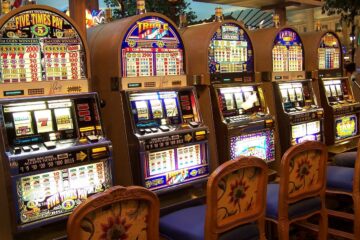
Traditional machines used physical spinning reels, while modern versions commonly use electronic displays or digital interfaces.
A typical slot game may include:
- Multiple reels
- Different symbols
- Winning combinations
- Paylines or winning ways
- Bonus rounds
- Special symbols
- Progressive features
- Sound and visual effects
The exact rules depend on the individual game.
How Do Slot Games Work?
The basic process is relatively simple.
Choose a Game
Players select a slot game based on its theme, features, and rules.
Understand the Paytable
The paytable explains which symbols can produce winning combinations and how the game’s features work.
Select a Wager
Where real-money wagering is involved, players choose an amount within the available limits.
Start the Round
The player activates the game, causing the reels or symbols to change.
Check the Result
The resulting combination is compared with the game’s predetermined winning conditions.
If the combination qualifies, the corresponding payout or in-game reward is awarded according to the rules.
Understanding Slot Reels
Reels are one of the most recognizable elements of a slot game.
Traditional machines commonly featured three physical reels. Modern games can use many different reel configurations.
For example, a game may use:
- Three reels
- Five reels
- Six or more reels
- Expanding reels
- Cluster-based layouts
- Grid-based symbol arrangements
More reels do not automatically mean better chances of winning. The game’s complete mathematical design determines the actual probabilities and payout structure.
What Are Paylines?
A payline is a defined pattern through which a game identifies winning symbol combinations.
Traditional slots may use a small number of paylines, while modern games can include numerous paylines or alternative systems.
For example, a simple three-reel game might recognize a matching combination across the center row.
Other games may recognize symbols across several rows and columns.
Some modern games replace conventional paylines with systems such as “ways to win” or cluster-based combinations.
Common Slot Symbols
Slot games often use a mixture of traditional and themed symbols.
Fruit Symbols
Classic machines frequently use symbols such as cherries, lemons, oranges, and other fruit.
Number and Letter Symbols
Some games use traditional playing-card-inspired symbols such as A, K, Q, and J.
Wild Symbols
A wild symbol may substitute for another symbol under the game’s rules.
However, wild functionality varies considerably between games.
Scatter Symbols
Scatter symbols can trigger bonus features or free-play rounds in some games. The exact requirements differ by title.
Bonus Symbols
Some games include special symbols that activate additional features, mini-games, or multipliers.
Players should always check the paytable because the same symbol type can behave differently in different games.
Types of Slot Games
The slot category includes many different styles.
Classic Slots
Classic slots generally have simple layouts and traditional symbols. They often emphasize straightforward gameplay rather than numerous bonus mechanics.
Video Slots
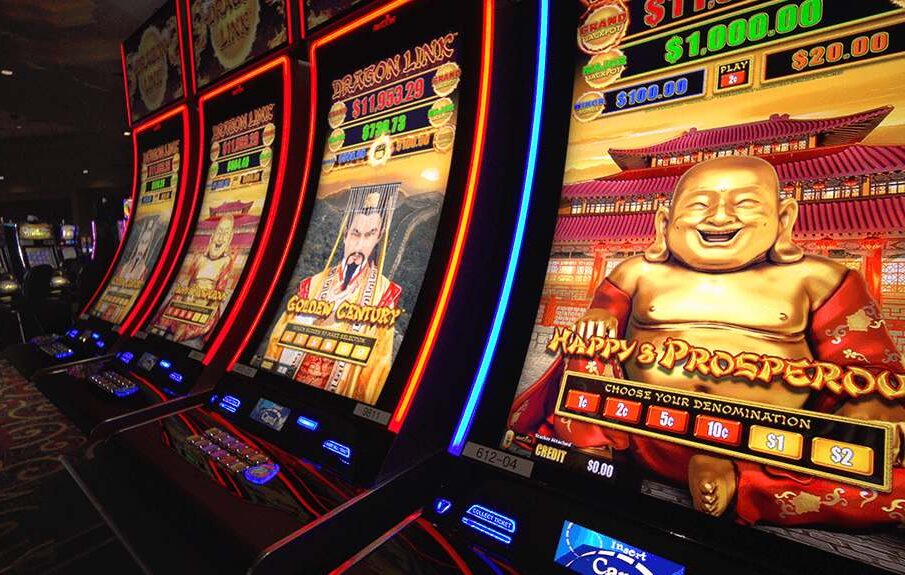
Video slots use digital graphics, animations, sound effects, and more elaborate themes.
They may include multiple reels, numerous paylines, wild symbols, bonus rounds, and other features.
Progressive Slots
Progressive games may contribute a portion of wagers toward a growing jackpot pool.
The jackpot can increase as qualifying gameplay continues, depending on the specific system.
Online Slots
Online slots are digital versions designed for internet-based gaming platforms. They may offer a broad range of themes, layouts, and features.
Branded or Themed Slots
Some games are designed around recognizable fictional themes, historical settings, entertainment concepts, or original characters.
The theme changes the visual and audio presentation, but the underlying gameplay remains based on the game’s programmed mechanics.
Understanding Random Outcomes
Modern slot games generally use a random number generation system to determine results.
The system continuously produces values, and the game translates the relevant result into the symbols displayed to the player.
This means previous outcomes do not normally determine the next outcome.
For example, if a particular symbol has not appeared for many rounds, that does not automatically mean it is “due” to appear next.
Likewise, a series of winning results does not guarantee that another win is coming.
What Is Return to Player?
Return to player, commonly abbreviated as RTP, is a theoretical percentage used to describe the long-term expected return of a particular game under its specified conditions.
For example, a game with a theoretical RTP of 96% would, over a very large number of plays and under the relevant assumptions, theoretically return about $96 for every $100 wagered.
This does not mean an individual player will receive 96% of their money back during a short session.
Short-term results can vary dramatically.
What Is Volatility?
Volatility describes the pattern and size of potential outcomes in a slot game.
Lower-Volatility Games
These games may tend to produce smaller outcomes more frequently, although this is not a guarantee.
Higher-Volatility Games
These games may have less frequent winning outcomes but potentially larger individual payouts.
Volatility does not mean a player is more likely to make money. It describes the distribution of outcomes.
Bonus Features in Slot Games
Modern slot games often include additional mechanics designed to create variety.
Free Spins
A bonus condition may award a number of rounds without requiring an additional wager under the game’s rules.
Multipliers
A multiplier can increase the value of a qualifying win.
Expanding Symbols
Some games allow certain symbols to expand across a reel or grid during a feature.
Bonus Rounds
Players may be presented with a separate mini-game after triggering a particular combination.
Cascading Symbols
In some games, winning symbols disappear and new symbols fall into the empty spaces, creating the possibility of additional combinations.
The presence of these features does not guarantee more frequent wins.
Example of a Slot Round
Imagine a five-reel game with a particular winning combination.
A player activates a round, and the resulting symbols appear as:
Cherry – Bell – Bell – Bell – Lemon
If the game’s paytable specifies that three matching bell symbols in the required positions create a winning combination, the player receives the corresponding payout.
If another round produces:
Lemon – Star – A – K – Cherry
and no qualifying pattern exists, there may be no payout for that round.
The exact result depends entirely on the game’s rules.
Common Misconceptions About Slots
“A Losing Machine Is Due for a Win”
This is a common misconception. A series of losing outcomes does not necessarily increase the probability of a win on the next round.
“A Recent Jackpot Means the Machine Is Cold”
A previous jackpot does not automatically determine the next outcome.
“Changing the Bet Guarantees a Better Result”
Changing the wager does not guarantee a winning combination.
“There Is a Secret Timing Trick”
There is no universal button-timing technique that guarantees a particular outcome in a properly functioning random-based game.
Understanding these misconceptions can help players approach slot games more realistically.
Tips for Responsible Slot Play
When real money is involved, responsible play should be the priority.
Set a Budget
Decide how much you can comfortably spend before playing.
Set a Time Limit
Entertainment can become less enjoyable when sessions continue longer than intended.
Do Not Chase Losses
Trying to recover previous losses by increasing wagers can quickly create additional financial problems.
Treat Wagers as Entertainment Spending
Money used for gambling should never be money required for essential expenses.
Take Breaks
Regular breaks can help maintain perspective and prevent impulsive decisions.
Know When to Stop
Winning is not guaranteed, and a losing session should not become a reason to continue spending.
Slot Games Without Real-Money Wagering
Slots can also exist as recreational or social games that do not involve real-money gambling.
Free-play versions can allow people to explore themes and mechanics without risking money.
These formats can be useful for understanding:
- Reel layouts
- Symbol functions
- Bonus mechanics
- Paytables
- Game interfaces
However, players should still understand whether a particular platform uses virtual items, paid features, or other monetized elements.
Frequently Asked Questions
What is a slot game?
A slot game is a chance-based game involving reels or symbol arrangements where the result is determined according to the game’s programmed rules.
Are slot results predictable?
Properly designed random-based games are not intended to be predictable from previous results.
What does RTP mean?
RTP stands for return to player. It represents a theoretical long-term percentage associated with a game’s expected return under specified conditions.
What is volatility in a slot game?
Volatility describes the general distribution of winning outcomes, including how frequently wins may occur and how large individual outcomes may be.
What is a wild symbol?
A wild symbol may substitute for other symbols in qualifying combinations, depending on the game’s rules.
What is a scatter symbol?
A scatter symbol may activate features such as bonus rounds or free spins when specific conditions are met.
Does playing longer improve the chance of winning overall?
Playing longer does not guarantee a profit. More rounds create more opportunities for both wins and losses.
Can a slot machine be “due” for a win?
No. A previous series of losing results does not automatically mean the next round is more likely to produce a win.
Are slot games based on skill?
Most conventional slot games are primarily chance-based. Player decisions may involve selecting a game or wager, but these choices do not control the random outcome of a particular spin.
Conclusion
Slot games have evolved from simple mechanical machines into sophisticated digital experiences featuring multiple reels, themed graphics, bonus rounds, special symbols, and different ways to create winning combinations.
Despite their visual complexity, the fundamental principle remains straightforward: the game generates an outcome according to its programmed rules, and the resulting symbols determine whether a qualifying combination has occurred.
Understanding concepts such as paylines, wilds, scatters, RTP, and volatility can help players make sense of different games. Just as importantly, recognizing that past outcomes do not predict future results can prevent common misconceptions.
When money is involved, slot games should be treated as entertainment rather than a dependable source of income. Setting limits, avoiding loss chasing, and understanding the rules can help keep the experience controlled and responsible.