Card Game: A Complete Guide to Types, Rules, Strategy, and Enjoyable Play
Introduction
A card game is more than a simple way to pass the time. For centuries, people have used cards for entertainment, competition, learning, and social interaction. From quick games played with friends to detailed strategy games that require careful planning, cards can create experiences for almost every type of player.
One of the biggest advantages of card games is their flexibility. A single deck can be used for many different activities, while specially designed decks can introduce unique themes and gameplay mechanics. Some games depend largely on luck, while others reward memory, observation, probability, and strategic thinking.
Understanding the different types of card games can help beginners choose something suitable and can also introduce experienced players to new ways of enjoying this classic form of entertainment.
What Is a Card Game?
A card game is a game in which cards are the primary components used to play. Players may receive cards from a shuffled deck, draw cards during their turns, exchange cards, collect combinations, or compete against other players.
The objective changes from one game to another.
A game might require players to:
- Reach a specific score
- Collect matching sets
- Build sequences
- Win individual tricks
- Discard all their cards
- Create the strongest combination
- Complete a particular pattern
- Achieve a specific objective before opponents
Because the rules can be changed and adapted, card games can be simple enough for young children or complex enough for experienced competitors.
Why Card Games Continue to Be Popular
Card games have survived changes in technology and entertainment because they offer several practical advantages.
Easy to Set Up
Many traditional games need only a deck of cards and a table. There is little preparation compared with games that require large boards, equipment, or complicated installations.
Portable
A deck can easily fit into a bag, making card games useful during travel, family visits, holidays, and gatherings.
Social
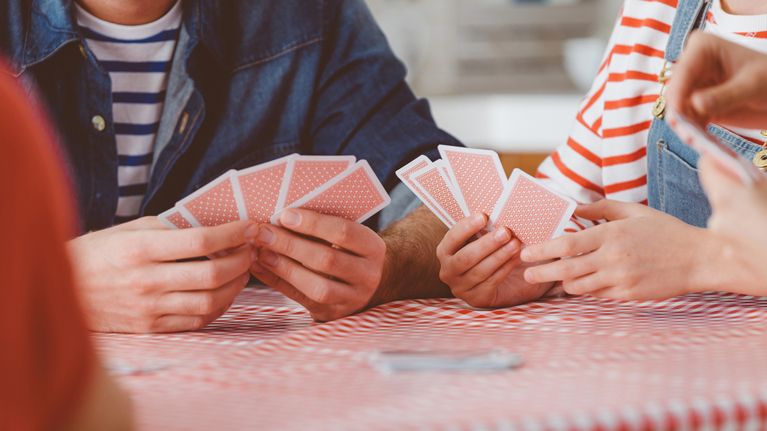
Many card games encourage direct interaction between players. People can talk and enjoy friendly competition while playing.
Adaptable
The same cards can be used for completely different games. This gives players many entertainment options without needing a large collection of equipment.
Suitable for Different Skill Levels
There are beginner-friendly games with only a few rules and advanced games that require considerable strategic thinking.
Main Types of Card Games
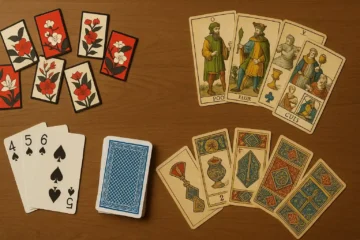
The world of card games includes many categories. Understanding these categories makes it easier to find a game that matches your interests.
Trick-Taking Card Games
Trick-taking games are built around rounds in which each player usually plays one card. The strongest qualifying card wins the trick according to the particular rules.
Players may need to follow a suit, use a trump suit, or make decisions based on cards already played.
These games often reward:
- Memory
- Planning
- Observation
- Timing
- Probability awareness
Trick-taking formats can range from simple family games to highly strategic competitive games.
Matching Card Games
Matching games focus on finding cards that share a particular characteristic.
The matching feature might be:
- Number
- Suit
- Color
- Symbol
- Picture
- Word
Because the central idea is usually easy to understand, matching games are often suitable for children and beginners.
Shedding Card Games
In shedding games, players generally attempt to get rid of all their cards before their opponents.
The rules may require a player to match the previous card by color, number, suit, or another property.
These games often have straightforward rules but can still include strategic decisions about when to play particular cards.
Collection Card Games
Collection games focus on gathering specific groups or combinations of cards.
A player may need to collect cards of the same rank, complete a sequence, or gather a particular combination to score points.
The challenge comes from deciding which cards to keep and which ones to discard or exchange.
Solitaire Card Games
Solitaire is a broad category of card games designed for one player.
The cards are usually arranged in a specific layout. The player then attempts to organize them according to the rules.
Solitaire is useful for people who want an independent activity and do not have another player available.
Strategy Card Games
Strategy card games place greater emphasis on decision-making.
Players may have to manage resources, predict opponents’ actions, create combinations, and plan several moves ahead.
Luck may still influence which cards become available, but the player’s decisions can have a significant effect on the overall experience.
Collectible and Customizable Card Games
Some modern card games allow players to build customized decks from larger collections of cards.
Different cards can have different effects, strengths, weaknesses, or abilities.
Players may spend time experimenting with combinations and adjusting their decks to create different strategies.
This type of card game can appeal to people who enjoy customization and long-term strategic development.
Understanding a Standard Playing Card Deck
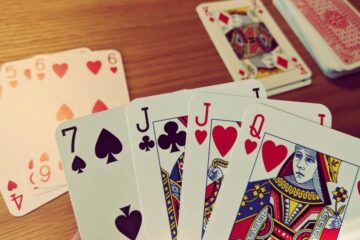
The traditional 52-card deck is one of the most recognizable card sets.
It contains four suits:
Hearts
Hearts are represented by a red heart symbol.
Diamonds
Diamonds are represented by a red diamond symbol.
Clubs
Clubs are traditionally black and use the club symbol.
Spades
Spades are traditionally black and use the spade symbol.
Each suit normally contains thirteen ranks:
- Ace
- 2
- 3
- 4
- 5
- 6
- 7
- 8
- 9
- 10
- Jack
- Queen
- King
Some games use jokers, while others remove certain cards to create a specific deck.
How to Learn a New Card Game
A complicated rulebook can make a new game appear more difficult than it really is. A structured approach can make learning much easier.
Start With the Goal
First understand what players are trying to achieve.
For example, the goal might be to earn the most points, eliminate all cards, or complete a particular combination.
Learn the Basic Turn
Find out what happens when it is your turn.
Does a player draw a card? Can they play one card? Are they allowed to exchange cards?
Understanding the basic turn structure provides a foundation for everything else.
Learn Special Rules
Once the basic turn is clear, learn the special cards, exceptions, penalties, and scoring rules.
Play a Practice Round
A practice round allows everyone to learn by doing.
Mistakes are normal when learning a new game, so the first round should be treated as an opportunity to understand the rules rather than a serious competition.
Example of a Simple Card Game
Imagine a basic two-player game in which each player receives five cards.
The goal is to collect three cards of the same rank.
For example, a player might hold:
- 4 of Hearts
- 4 of Spades
- 9 of Clubs
- Queen of Diamonds
- 2 of Hearts
The player already has two cards of the same rank and may try to obtain another 4 during future turns.
This simple example demonstrates how collecting combinations can create a basic objective.
More advanced games can build much deeper strategies around the same concept.
Card Games and Strategic Thinking
Some card games encourage players to think beyond their immediate move.
A player may need to consider what cards opponents could hold, what cards have already been played, and what options might become available later.
Planning Ahead
A strong player often considers more than one possible outcome before making a move.
Managing Risk
Some decisions offer a potentially large reward but also carry greater risk.
Reading the Game
Observing what other players do can provide useful information about their possible cards or plans.
Adapting to New Information
A player’s strategy may need to change when new cards are revealed.
These elements can make strategic card games engaging even after many rounds.
The Role of Luck
Luck is an important part of many card games because players do not always control which cards they receive.
A strong player can still receive an unfavorable hand, while a beginner may occasionally receive excellent cards.
However, games with strategic elements give players opportunities to make decisions about how to use what they receive.
This creates an interesting balance between chance and skill.
Card Games for Families
Card games can be a practical choice for family entertainment because many formats are easy to adapt.
For younger children, games can focus on:
- Matching
- Colors
- Numbers
- Simple counting
- Memory
Older children can explore games involving more planning and decision-making.
Family card games can also teach players to take turns, follow instructions, handle winning and losing, and communicate with others.
Educational Uses of Card Games
Cards can be useful learning tools when the content is designed around an educational goal.
Mathematics
Cards can help children practice addition, subtraction, multiplication, number comparison, and basic probability.
Language Learning
Cards can contain vocabulary words, pictures, definitions, or sentence prompts.
Memory Practice
Matching cards can encourage players to remember locations and previously revealed information.
General Knowledge
Custom cards can contain questions and answers covering subjects such as geography, science, history, or literature.
This makes card-based activities useful in both classrooms and home learning environments.
How to Organize a Card Game Night
Hosting a card game night does not require extensive preparation.
Choose Suitable Games
Consider the number of guests and their experience levels before selecting the games.
Explain Rules Clearly
Give a short explanation and demonstrate an example when necessary.
Prepare Enough Space
Players should have enough room to hold their cards and place played cards where everyone can see them.
Start With an Easy Game
Beginning with a simple game can help everyone become comfortable before moving to more complicated formats.
Keep the Atmosphere Friendly
The goal of a casual game night is usually to have fun. Friendly competition is enjoyable, but disagreements over minor rules can quickly reduce the experience.
Common Mistakes When Playing Card Games
Not Agreeing on Rules
House rules can be perfectly acceptable, but everyone should know about them before the game begins.
Forgetting the Objective
Players should understand what earns points or produces a win.
Playing Too Quickly
New players need time to understand the turn structure and special rules.
Ignoring Other Players
In strategic games, paying attention to opponents’ actions can be important.
Focusing Only on Winning
A card game can be enjoyable even when a player does not finish first. The social experience and learning process are also valuable.
Traditional Card Games vs. Digital Card Games
Technology has changed how people experience card games.
Physical Card Games
Traditional games provide face-to-face interaction. Players physically shuffle, deal, draw, and organize cards.
This format is particularly suitable for family gatherings and social events.
Digital Card Games
Digital games can automatically handle:
- Shuffling
- Dealing
- Scoring
- Timers
- Rule enforcement
- Game setup
They can also allow players to compete remotely or practice against computer-controlled opponents.
Both formats have their own advantages, and the best choice depends on personal preference.
Tips for Becoming Better at Card Games
Know the Rules
Understanding the rules completely prevents unnecessary mistakes.
Pay Attention
Watch which cards are played and notice how other players behave.
Practice Regularly
Experience makes it easier to recognize common situations.
Learn From Mistakes
Instead of becoming frustrated after a poor move, consider what could have been done differently.
Avoid Predictable Play
In strategic games, using exactly the same approach every time can make your decisions easier for opponents to anticipate.
Frequently Asked Questions
What is a card game?
A card game is a game that uses cards as the main playing components. The rules and objectives vary depending on the particular game.
How many cards are in a standard deck?
A standard deck usually contains 52 cards divided into four suits, with 13 ranks in each suit.
Can card games be played with two people?
Yes. Many card games are specifically designed for two players.
Are card games suitable for children?
Many are. Simple matching, counting, memory, and comparison games can be suitable for younger players when the rules and themes are age-appropriate.
Can card games improve mental skills?
Some games encourage memory, concentration, strategic thinking, probability awareness, and decision-making. The benefits depend on the type of game and how it is played.
Are card games based entirely on luck?
No. Some games depend heavily on luck, while others involve significant strategic decision-making. Many combine both chance and skill.
How can beginners learn complicated card games?
Start with the objective and basic turn structure. Then learn special rules and practice through a few relaxed rounds.
Can I invent my own card game?
Yes. You can create a card game by defining the objective, designing the cards, establishing turn rules, and deciding how players score or win. Testing the game with others is an important part of improving the rules.
Conclusion
Card games remain a versatile form of entertainment because they can be simple, competitive, strategic, educational, or social. A traditional deck can support countless activities, while modern specialty decks can create entirely new experiences.
For beginners, learning a card game is easiest when the objective and basic turn structure are understood first. After that, players can gradually learn special rules and explore more advanced strategies.
Whether you are looking for a family activity, a game for friends, a learning tool, or a solo pastime, card games offer plenty of possibilities. Their combination of simple equipment, flexible rules, human interaction, and unpredictable outcomes continues to make them a lasting part of recreational culture.